
Partners Enhancing Resilience for People Exposed to Risks
Partners Enhancing Resilience of People Exposed to Risks — advancing disaster risk-related scholarship across Africa for sustainable development.
PERIPERI U is a collaborative platform that brings together universities across Africa to strengthen disaster risk reduction. The name stands for Partners Enhancing Resilience for People Exposed to Risks, reflecting its core mission to advance university-led action on risk and vulnerability across the continent.
The initiative began in 2006–2007 with a pilot phase involving four academic institutions in Algeria, Ethiopia, South Africa, and Tanzania. During this period, six locally relevant short courses on risk reduction were delivered, reaching more than 170 practitioners and students. These courses covered a wide range of topics, from seismic vulnerability to community risk assessment, demonstrating both the relevance and demand for such capacity-building efforts.
Building on the success of this pilot, PERIPERI U expanded its reach across Africa with the goal of strengthening disaster risk teaching and learning capacity in institutions across all African regional economic communities. Today, the network has grown to include 23 partner institutions. With a strong foundation and increasing demand, members continue to develop formal academic programmes in disaster risk reduction, contributing to the growth of skilled human capacity across the continent.
At the heart of PERIPERI U is its greatest strength: a commitment to joint learning and a non-hierarchical partnership model that fosters collaboration, knowledge sharing, and mutual growth among its members.

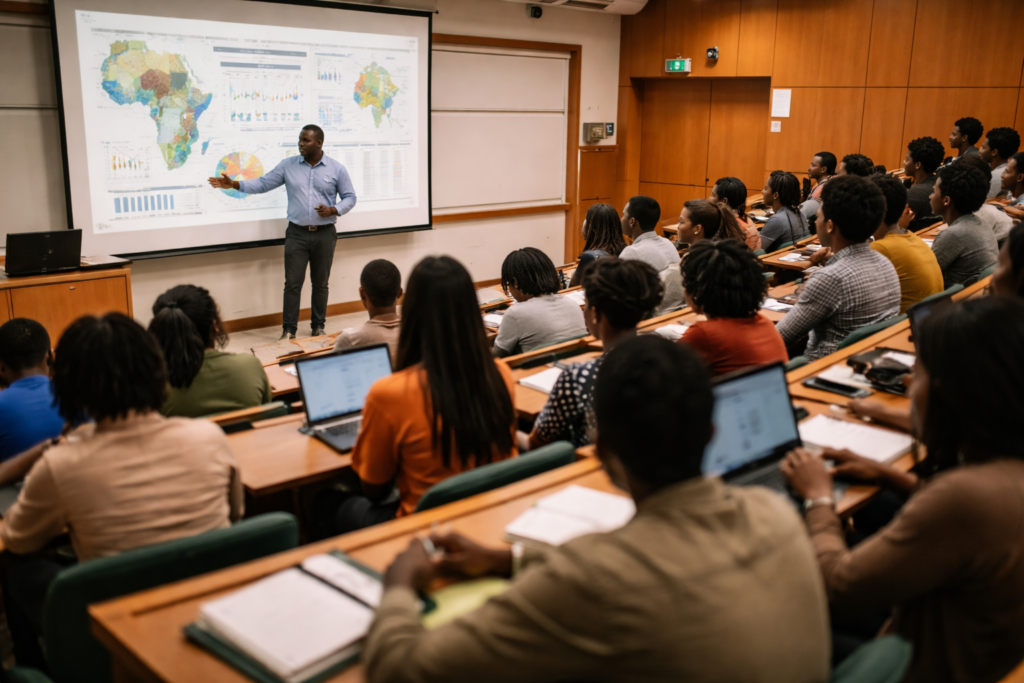
Although Africa is not traditionally viewed as a continent with established capacities in disaster risk reduction, there has been a surge of interest and initiative in risk reduction in recent years. This has been significantly driven by UNISDR (United Nations International Strategy for Disaster Reduction), as well as others, including the ProVention Consortium and a number of non-governmental organisations.
With the global adoption of the Hyogo Framework of Action in 2005 and the following Sendai Framework for Action in 2015, there has also been a welcome policy shift both by external assistance partners and within African countries themselves. There is now an explicit priority on strengthening national and local capacities to sustainably reduce disaster risks. This is accompanied by the recognition that formal education, including national institutions of higher learning within African countries, has a critical role in disaster risk management.
There are now a wide range of formal academic programmes evolving across the continent, in diverse risk management-associated disciplines, and different thematic emphases. Many of these are also at post-graduate level, and provide scope for professional development that is more affordable than studying outside the continent.
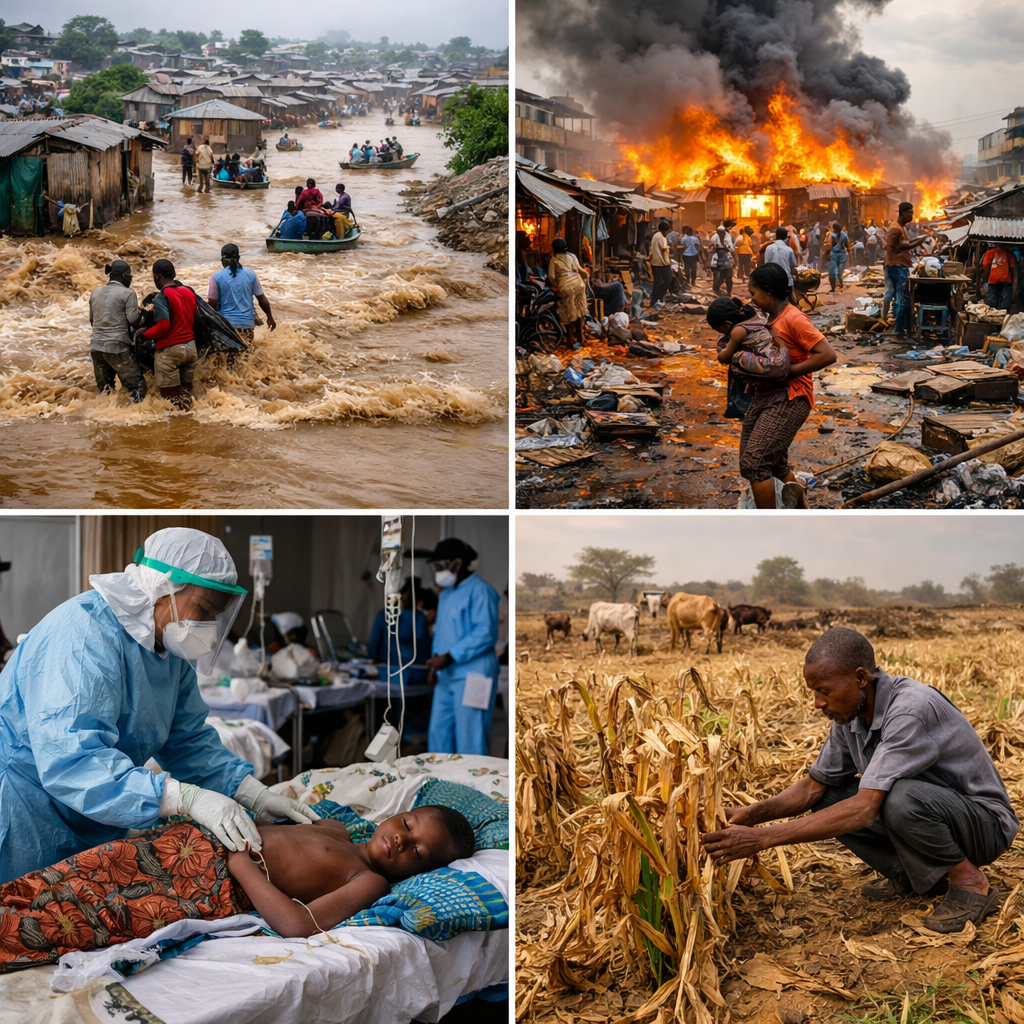
The original motivation for PERIPERI U was a shared concern that disasters disrupt and undermine development in Africa. For Instance, market and informal settlement fires in Africa’s rapidly growing cities spread quickly and lead to deaths and property loss. Flash floods frequently claim lives, damage crops, cause livestock death and may result in the displacement of thousands of people from their homes and sources of making a living. Infectious disease outbreaks also occur often due to weak public health systems and poor water and sanitation services. Such events can have serious repercussions on an individual’s or household’s livelihood activities and capacities.
PERIPERI U partners have sought to understand local hazards and use locally derived research and knowledge to assist in building the capacity to reduce these disaster risks among communities. PERIPERI U persists to utilise its knowledge and resources to help improve risk management practices which is necessary for protecting social and economic development, especially in high risk countries and communities, from the major disruption such hazards can cause.
PERIPERI U has set itself five core objectives and services to provide:
Develop active teaching and training, research and policy advocacy capacity in Africa on disaster risk and vulnerability reduction.
Build capacity to provide at least 2-4 short courses annually in disaster risk management, vulnerability reduction, food/livelihood security or subjects relevant to risk and vulnerability reduction in their country.
Develop innovative and stimulating undergraduate and/or graduate programmes related to reducing or managing the risk and vulnerabilities within Africa.
Generate applied research outputs related to risks and vulnerabilities that increase local understanding and improve the risk management.
Since 2005, the partners have worked hard to bring PERIPERI U to where it stands today. This is a summary of PERIPERI U’s achievements and progress from 2005 to date.
Over 2500 students have registered from disaster-related academic programmes and courses in agriculture, engineering, urban planning, economics, environmental science and public health, creating a home grown surge in skilled human capital.
More than 1500 Disaster related Short Courses, reaching over 1500 professionals and practitioners in local languages.
Over 600 disaster risk related research outputs in the form of theses, published articles, books and unpublished professional reports.
Growing recognition of capacity to implement consultancies for government and international agencies.
Growth of partnership to 23 African academic institutions.
PERIPERI U has recently been recognised by the Integrated Research on Disaster Risk Science Committee as an International Centre of Excellence for Risk Education and Learning (ICoE-REaL).
Key to the partnership’s ability to conduct research, initiate academic programs, carry out short courses and take part in various meetings and exchanges across the continent and globally comes from the financial support offered by USAID. USAID is an International agency whose main goals are to assist in combating extreme poverty, as well as promote the development of resilient, democratic societies globally.
To attain these goals USAID believes it is essential to invest in building human capital, creating inclusive, sustainable and self-reliant societies and reaching out to the poorest and most vulnerable in the world in order to create a more prosperous and stable future for all. USAID is responsible for covering much of the partnership’s funding especially for staff salaries, academic programs travel for international exchange visits and engagements as well as subsidising short courses and research initiatives.
The IRDR is an interdisciplinary research programme sponsored by ICSU in partnership with the International Social Science Council (ISSC), and the United Nations International Strategy for Disaster Reduction (UN-ISDR). It is a global initiative seeking to address the challenges brought by natural hazard events, mitigate their impacts, and improve related policy-making mechanisms.
PERIPERI U has been recognised by the Integrated Research on Disaster Risk (IRDR) as a leader in enhancing risk related research and education on the African continent. For PERIPERI U’s success in this matter the IRDR Science committee awarded the partnership with the honourable status of being an ‘International Centre of Excellence for Risk education and Learning’ (ICoE-REaL). PERIPERI U aims to live up to this title by enhancing our academic programs and focusing on generating graduates who can make significant contributions to the field of disaster risk on the continent.
Connect with the PERIPERI U Secretariat for more information about our programmes, partnerships, and opportunities.